





GOLDSTEIN: PBO says federal spending, borrowing and debt up, economic growth down
Budget watchdog's economic forecast comes ahead of the feds' budget next month
Article content
See more Toronto Sun on Google — save as a Preferred Source

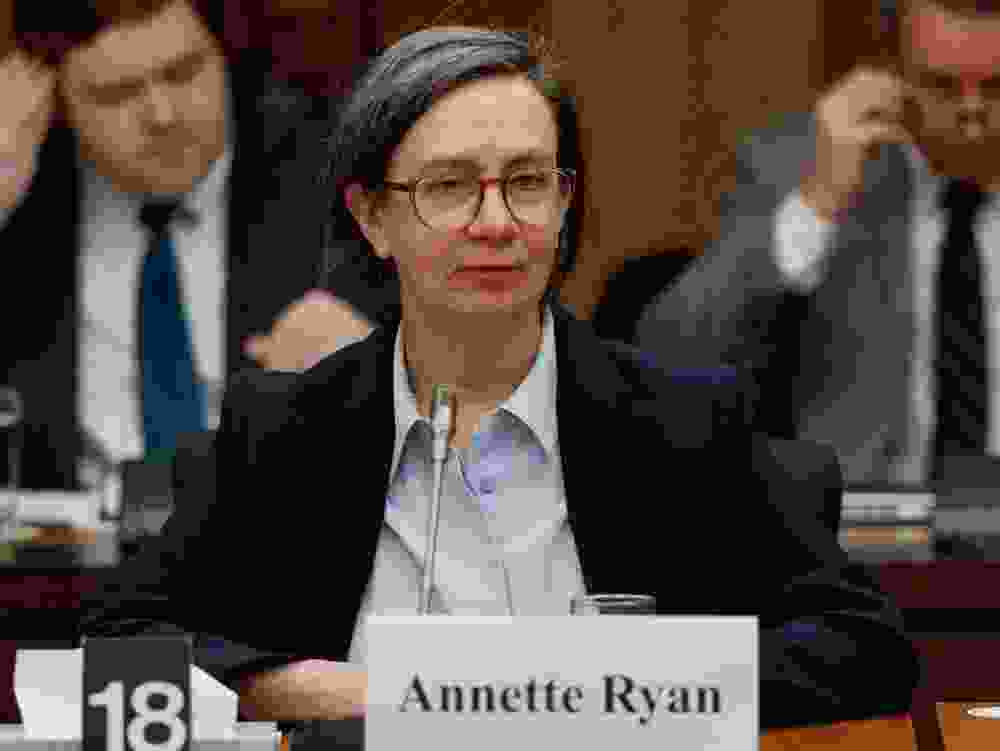
Parliamentary Budget Officer Annette Ryan released her economic and fiscal outlook for October this week, based on the spending of Prime Minister Mark Carney’s government.
Recommended Videos

tap here to see other videos from our team.
GOLDSTEIN: PBO says federal spending, borrowing and debt up, economic growth down Back to video
tap here to see other videos from our team.
Heading into the feds’ Nov. 5 budget, it’s not pretty.
The general tone was summed up by the first sentence in her press release: “Federal spending, borrowing and debt continue to rise amid weaker economic growth” and it gets worse from there.
Among Ryan’s findings:
Total federal government public debt is projected to rise from $1.3976 trillion this year to $1.6676 trillion in 2030-31.
The cost of paying annual interest on the total federal debt is now the fastest-growing expense of the Carney government, projected to increase from $59.3 billion this year to $83 billion in 2031.
According to the government’s spring economic update, $59.3 billion could otherwise have paid the cost of all federal transfer payments to the provinces and territories for health care this year ($57.4 billion).

As it is, that $59.3 billion in interest payments on the debt this year, doesn’t even lower the debt.
The PBO projects the debt service ratio, meaning debt charges relative to total government revenues, will rise from 10.5% in 2025-26 to 13.6% in 2030-31.
While this remains well below its peak in the 1990s when it reached a high of 37.6%, the PBO nonetheless warns that: “A rising interest burden means a growing share of federal revenue goes toward servicing debt rather than other possible fiscal priorities, such as reducing debt, increasing spending or providing tax relief.”
Debt charges per capita are projected to climb from $1,419 this year to $1,952 in 2030-31.
Cumulative deficits over the next five years are projected to total $333.3 billion.
Federal borrowing over the same period is projected to rise by $732.9 billion.
Debt-to-GDP ratio continues to rise
The federal debt-to-GDP-ratio – the traditional method by which governments measure their fiscal sustainability and which the Liberals used to promise would decline every year — is now projected to rise from 40.8% in 2026-27 to 42.6% in 2030-31.
During that period, the PBO projects per capita debt will increase from $33,436 in 2026-27 to $39,191 in 2030-31, growing faster than nominal (current-dollar) GDP per capita.
In that context, “the PBO continues to maintain that debt-to-GDP-ratio is an important benchmark for measuring fiscal health” and warns the Carney Liberals, “it will rise steadily over the five-year horizon.”
PBO notes feds’ accounting trick
Ryan also warns that while Carney will be able to meet his new “fiscal anchor” of balancing the federal operating budget in 2028–29 (Carney has since said he will actually do it in 2027-28) this “should not be interpreted as a balanced fiscal position. By design, it excludes debt-financed capital spending, meaning borrowing and debt can continue to grow while the target is being achieved.”
In other words, as the PBO noted in previous reports, claims by the government it is achieving a balanced budget is an accounting trick inconsistent with international accounting standards.
In fact, Ryan says:
“Federal borrowing will significantly exceed cumulative budgetary deficits over the projection period, because under accrual accounting, capital expenses and loans to Crown corporations are recorded as assets rather than liabilities. This obscures the realities of cash debt and raises questions about whether the current fiscal framework provides a complete and transparent picture of Canada’s fiscal sustainability.”
In addition, the PBO warns, the Carney government is not projected to meet its second “fiscal anchor” of a declining deficit-to-GDP ratio, which is projected to rise in 2027‑28 and marginally in 2029‑30.
Meanwhile, the PBO reports, the absence of a trade deal with the U.S. and the ongoing tariff war is depressing the Canadian economy, with the PBO projecting Canada’s real (inflation-adjusted) economic growth this year will be 0.9% and 1.5% in 2027, down from the PBO’s June projections of 1.1% in 2026 and 1.6% in 2027.
In the short term, the PBO notes, nominal GDP (meaning current, rather than inflation-adjusted dollars) is projected to rise by 5.6% this year and 3.4% in 2027, primarily because of inflation and high oil prices which increase government revenues.
For that reason the PBO projects the federal deficit this year will be $63.3 billion, down from its June forecast of $71.8 billion.
Over the longer term, however, Canadians can only hope that Carney’s increased government spending and debt will — to use his favourite term — “catalyze” economic growth.




Postmedia is committed to maintaining a lively but civil forum for discussion. Please keep comments relevant and respectful. Comments may take up to an hour to appear on the site. You will receive an email if there is a reply to your comment, an update to a thread you follow or if a user you follow comments. Visit our Community Guidelines for more information.